Why Can’t We Stop Killing Each Other?
Sainsbury Centre
How creative thinkers depict violence and use empathy to create change
Exhibition Design, Graphic Design
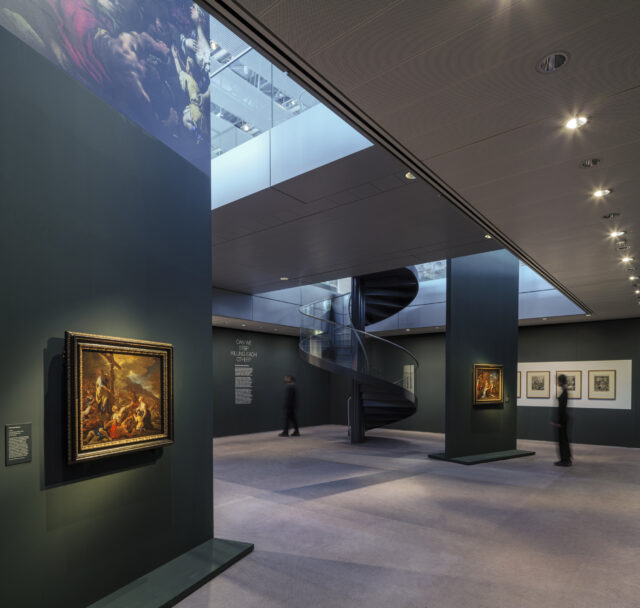
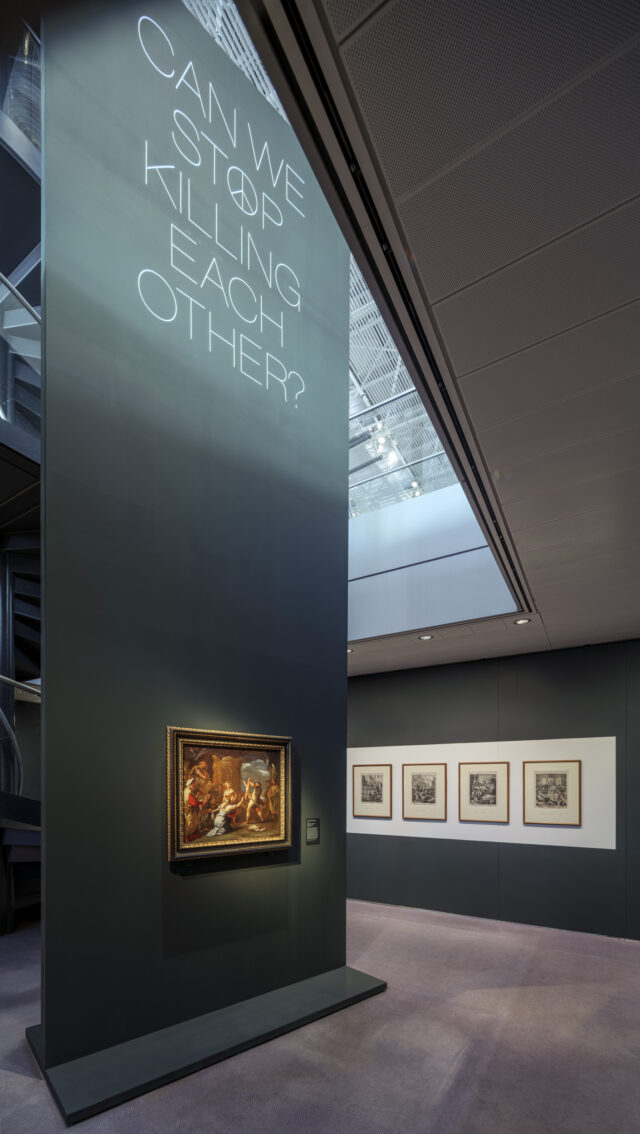
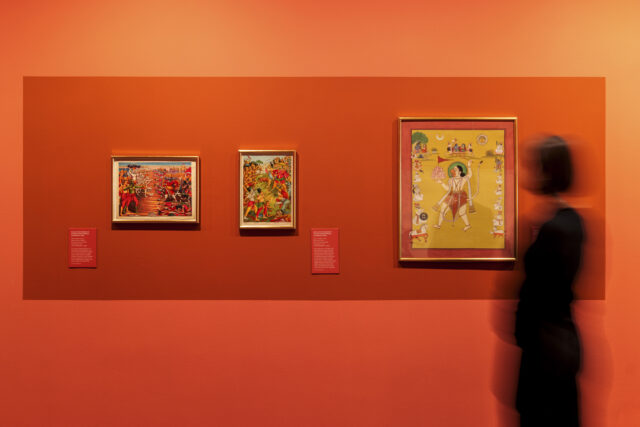
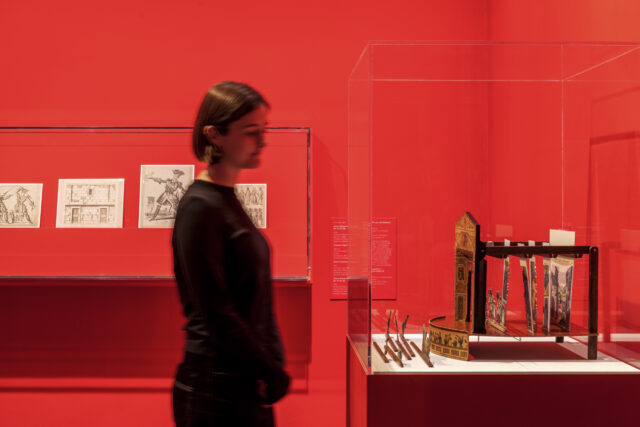
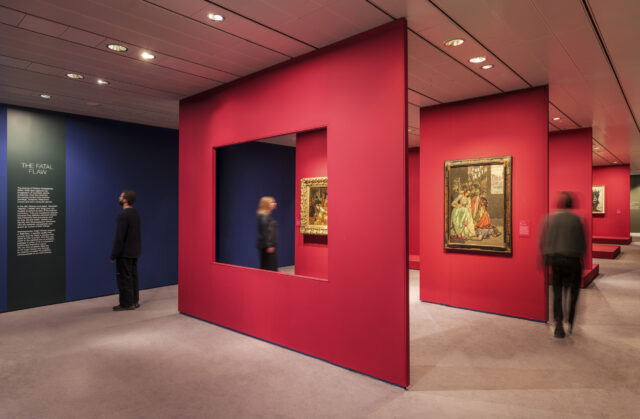
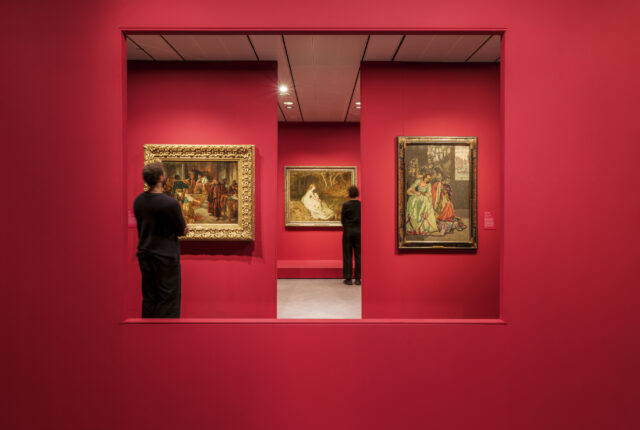
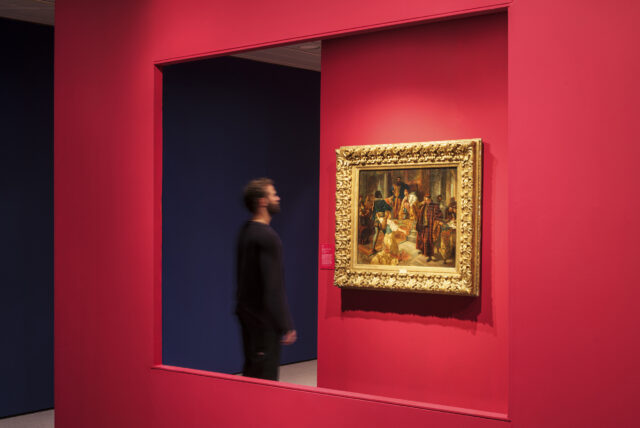
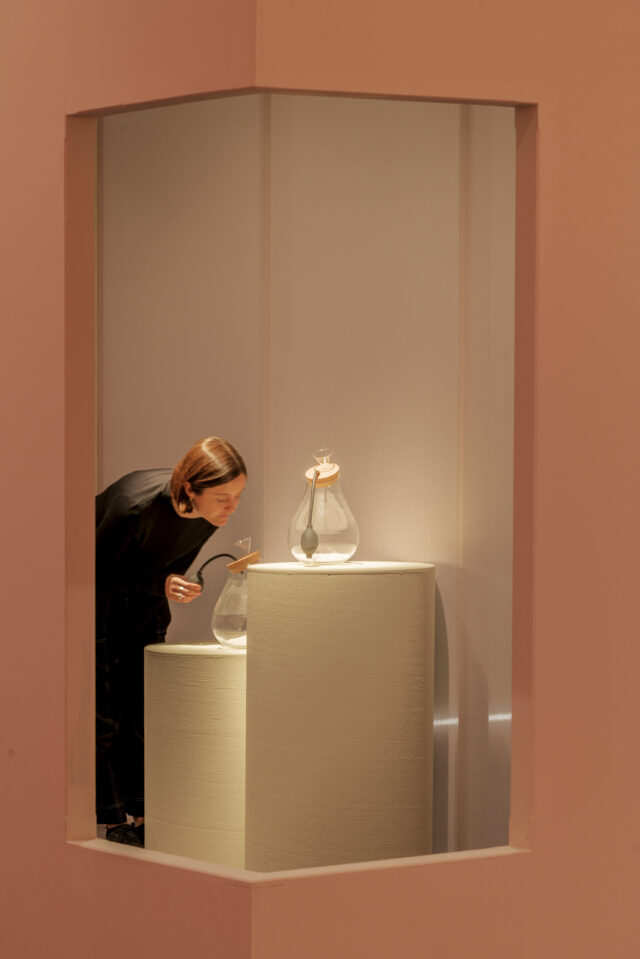
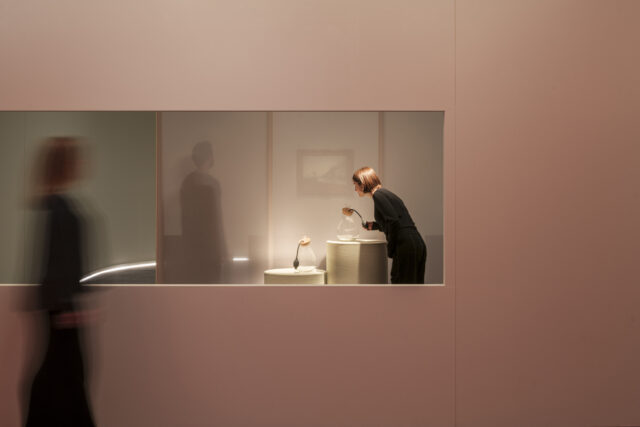
The exhibition ‘Why Can’t We Stop Killing Each Other?’ explores the fundamental question of why humans are led to kill and considers culture that wrestles with this notion, asking if creative thinkers – and the theatre plays, film and art they produce – can use empathy to create change and encourage people to choose hope over violence.
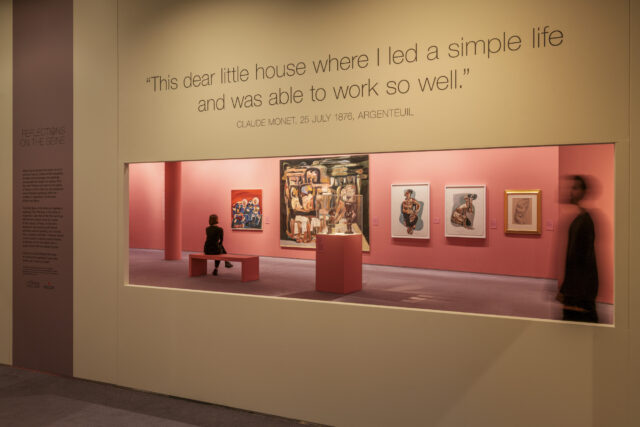
Nissen Richards Studio designed both the exhibition and the graphics for the new 853 sq m temporary show, which offered a large quantity of floor area set over a series of connected but very different spaces, meaning the design scheme needed to be strong and impactful, as well as clean and pared back, to showcase the very varied artworks on show in the best possible ways. Nissen Richards Studio’s approach was to use bold colour and forms throughout, directly influenced in each section by the artworks on show. Scale, colour and form therefore changed from space to space to ensure everything within the object range could be showcased in the most interesting way. The design team also made use of the Centre’s existing modular systems wherever possible, maximising intelligent re-use.
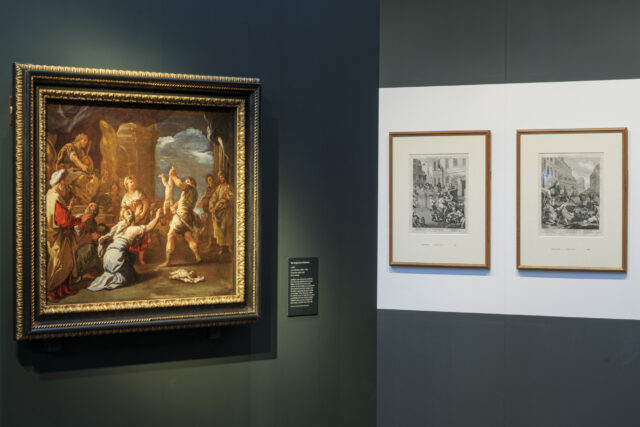
Two huge-scale totems were designed to rise from the lower ground floor to be visible on the floor above, acting as banners cutting through the double-height space to encourage visitors to come down to Gallery One’s introductory space. Here, colour is used dramatically, with deep forest-green walls acting to showcase two artworks by Luca Giordano, whilst a highlight white horizontal panel frames a series of Hogarth prints investigating the nature of human cruelty. This space also features the photographic series ‘Last Meal on Death Row’ by Matt Collishaw, which re-creates the final meals of death row inmates in the style of 17th-century Dutch still life paintings.
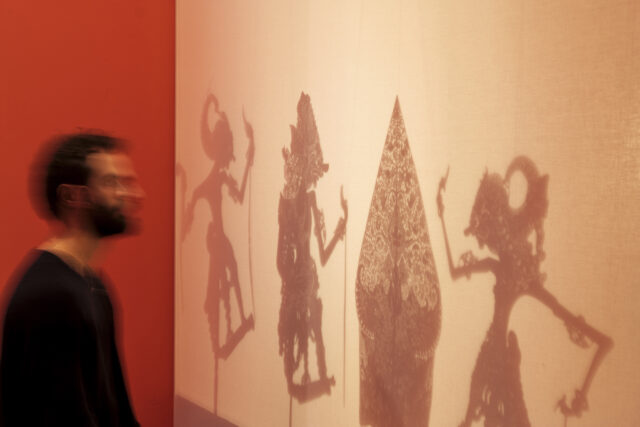
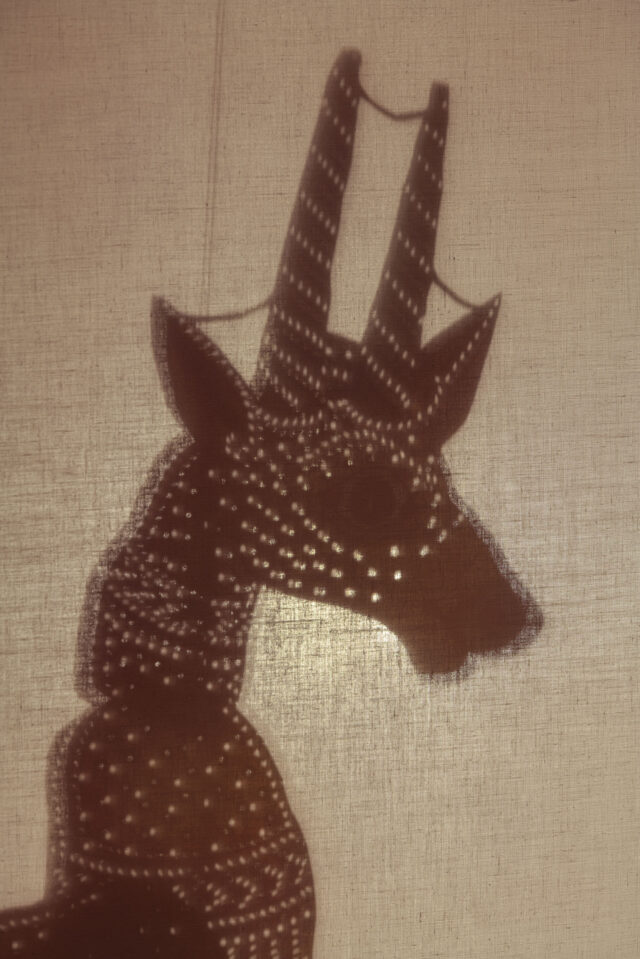
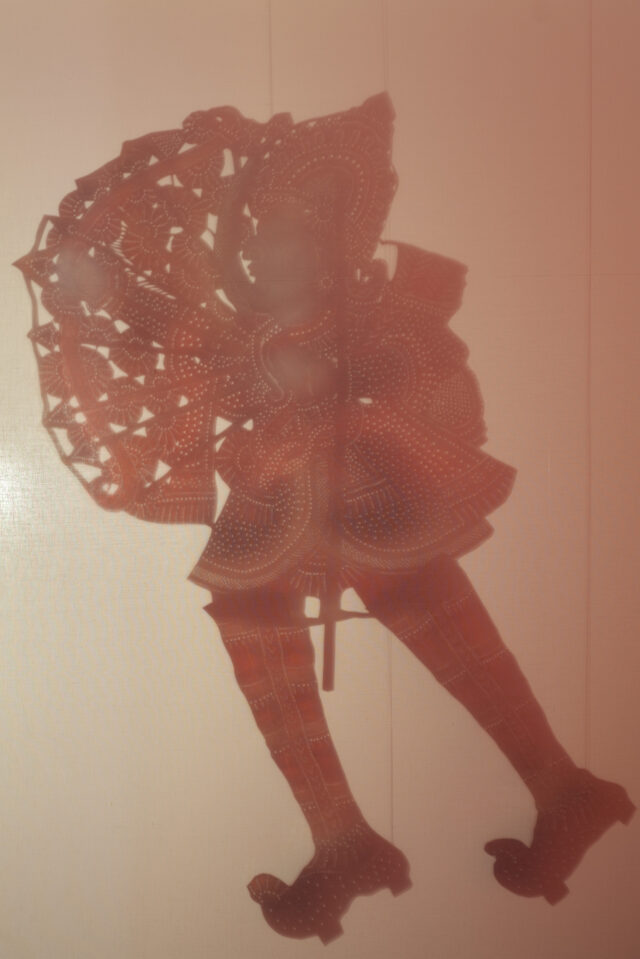
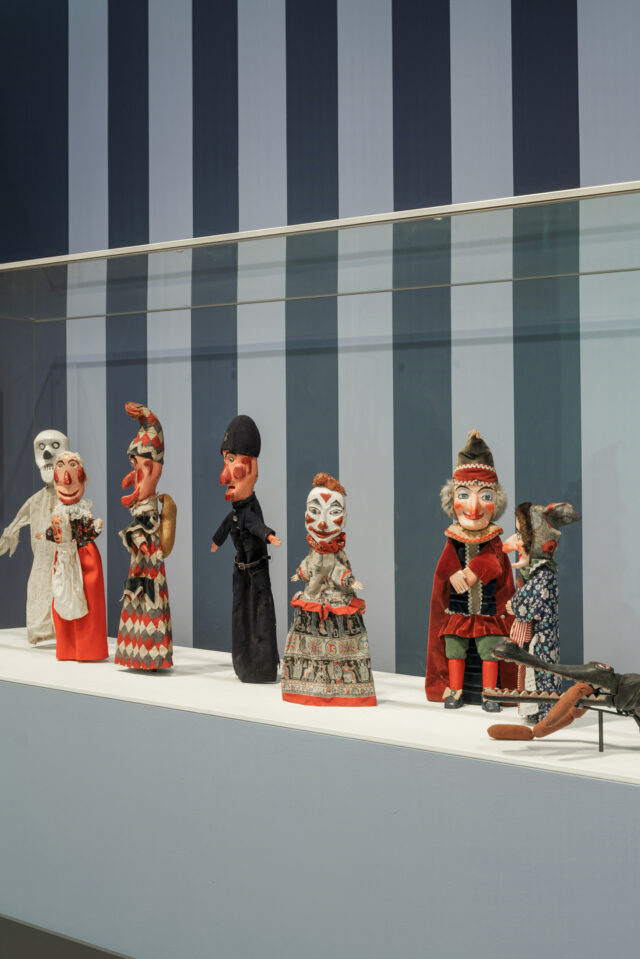
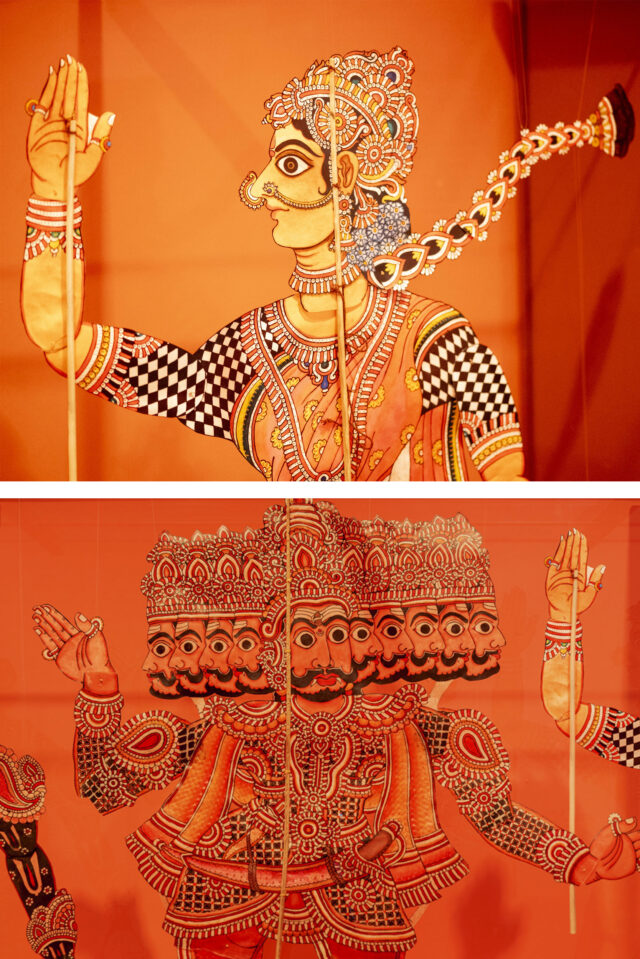
A linking corridor segment incorporates three individual bay areas, each designed as a separate roomset. Bay One features Indian and Indonesian shadow puppets, whilst the second bay is made up of Punch and Judy puppet displays with a dark and light blue striped backdrop – an abstract referral to traditional end-of-pier Punch and Judy sets. Bay Three focuses on toy theatres, with toy theatres and prints to one side and Japanese prints to the other, set against a super-bold ‘atomic red’ background. The Japanese prints are set within a deep room with glazing, featuring new flats behind the glass, and represent stories relating to violent acts of domestic abuse.
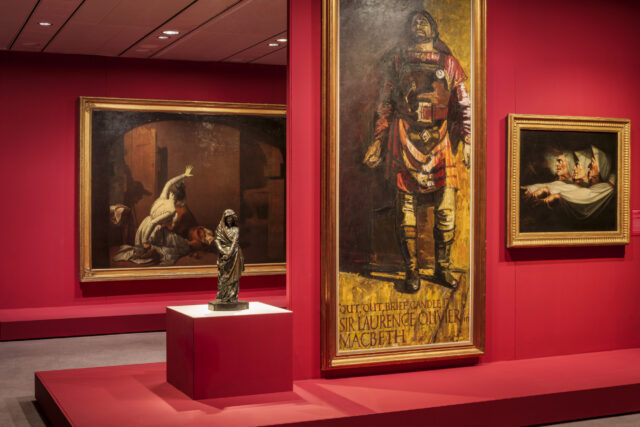
Gallery Two features representations of Shakespeare’s plays and shows the variety of stagings through time. An initial central display panel with a large aperture plays on the idea of framing in a toy theatre. A large AV area houses a film installation by Christian Marclay called ‘Crossfire’, which examines the act of killing in film through a vast array of film segments, with guns pointing straight at the visitor.
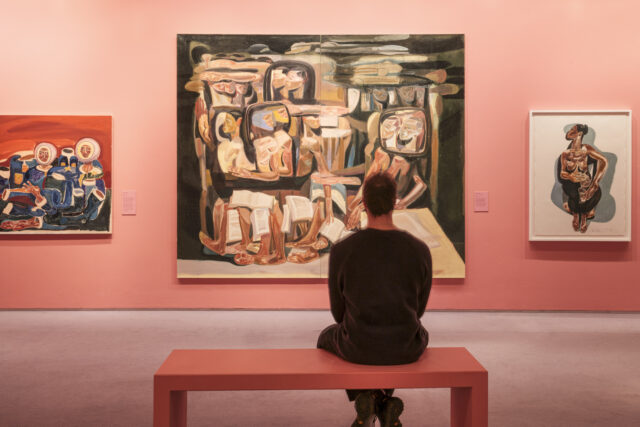
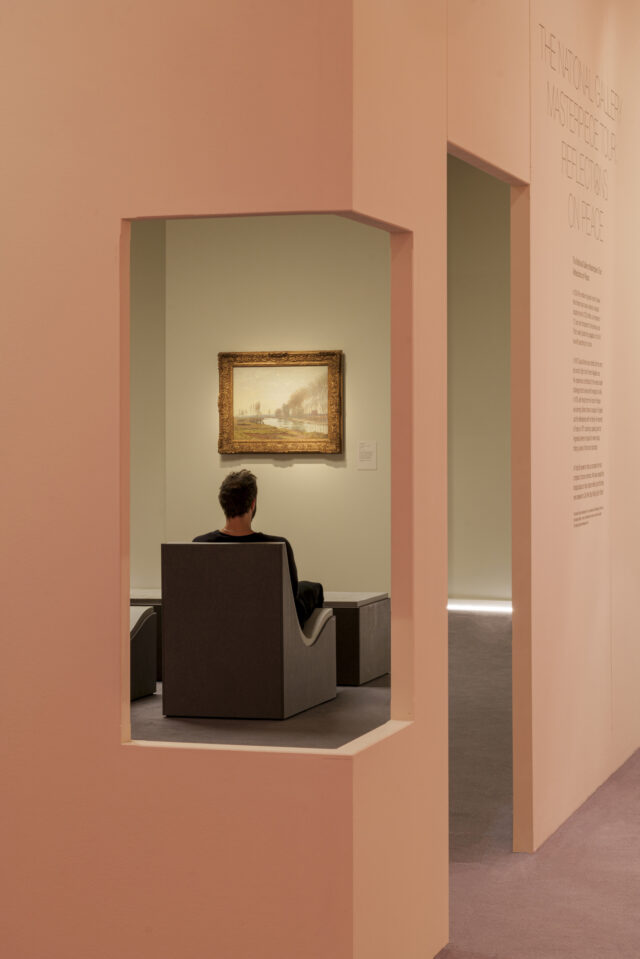
A dedicated final space follows, featuring works by the artist Tesfaye Urgessa, who has also done a residency at the gallery, with a central ‘contemplation space’ in a pale pink with a very pale green interior at its centre, housing a work by Monet – The Petit Bras of the Seine at Argenteuila. The artwork is a perfect embodiment of peace and tranquillity. As such, it provides a perfect final note to the themes the visitor has encountered.
Client
Sainsbury Centre
Location
Norwich
Role
Exhibition and Graphic Design
Photography: Gareth Gardner
Credits and with thanks to: Pollocks Toy Museum, Derby Museums, RSC Theatre Collection, Gagosian, Roberts Institute of Art, Kirklees Collection: Huddersfield Art Gallery, Fleming Collection, Bristol Museum and Art Gallery, University of Kent, Special Collections and Archives, Mat Collishaw " Last Meal on Death Row, Texas", Compton Verney Warwickshire, Touchstones Rochdale.